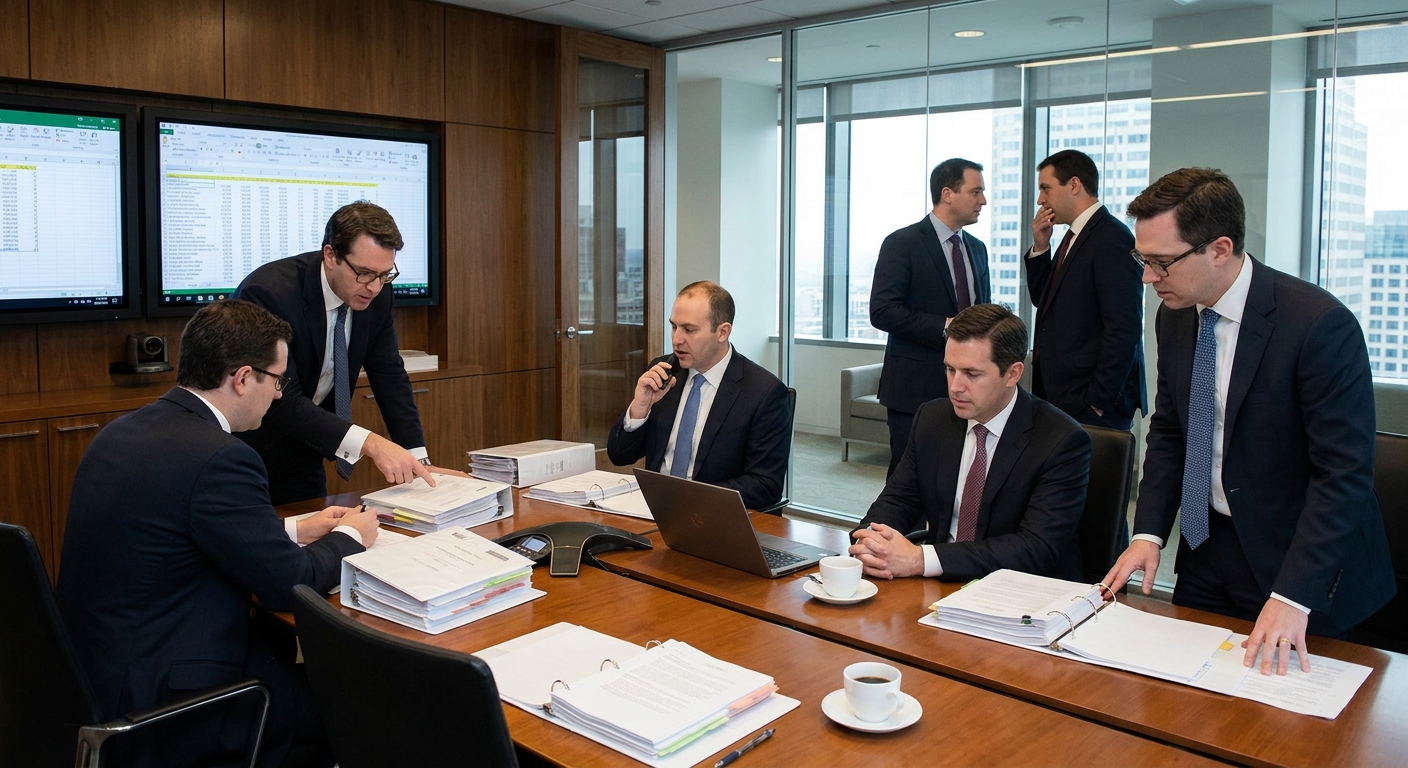
Legal due diligence is, at its core, a documentation exercise. Acquirers must verify what they are buying. Sellers must demonstrate what they are selling. The intermediaries — counsel, financial advisers, investment bankers — must create a record that can withstand scrutiny long after the deal has closed. Every representation made during the process carries weight. Every gap in the documentation is a potential liability.
Yet much of what gets said during due diligence happens in formats that have historically resisted documentation: management presentations, Q&A sessions, site visit conversations, stakeholder interviews, expert calls. These exchanges contain some of the most material information in any transaction — and for most of the history of M&A practice, they were captured by handwritten notes, if they were captured at all.
Transcription changes the economics of that problem. When every spoken exchange is automatically converted into a verified, searchable text record, the audit trail that protects all parties becomes a standard part of the process rather than a best-practice aspiration.
Where the Documentation Gaps Live in Due Diligence
The formal due diligence record — data room documents, disclosure schedules, legal opinions, financial statements — is typically well-maintained. The gaps live elsewhere: in the conversations that sit alongside those documents and give them meaning.
Consider a management presentation where the CFO makes representations about the company's revenue recognition practices. Those statements may be more material than anything in the data room, but unless counsel is transcribing in real time — which almost never happens — the record of what was actually said consists of whatever notes different participants happened to take. Two weeks later, when a discrepancy surfaces, what was said and what was understood may be impossible to reconcile.
Or consider a site visit where an operations director describes a process that turns out to be materially different from what was represented in the disclosure documents. The conversation is relevant. It may be the most important conversation of the entire process. But without a verbatim record, it becomes a matter of recollection — and competing recollections are the foundation of post-closing disputes.
The same problem applies to expert witness interviews, lender calls, regulatory briefings, and any other due diligence conversation that happens outside of formal written exchange. The document trail covers what was submitted. Transcription covers what was said.
Management Presentations: The Most Under-Documented Phase
Management presentations are among the most information-dense events in any M&A process. In the span of a few hours, senior executives make representations across finance, operations, technology, legal, and commercial matters — representations that will be relied upon in the purchase agreement and that will define the parties' respective exposures under the representations and warranties regime.
Conventional practice captures these presentations through slide decks and the notes of whoever happens to be in the room. This creates two problems. First, the slide deck captures only what was prepared, not the Q&A that often contains the most material disclosures. Second, notes taken by different counsel in different ways produce a fragmented record that cannot be used with any precision when a representation is later disputed.
A verbatim transcript of a management presentation changes what counsel can do with that record. Every representation is timestamped and attributable. The exact language used by the CFO when asked about pending litigation — "we are not aware of any material claims" — is preserved exactly as spoken. When a claim later surfaces, the question of what was disclosed becomes a fact question with a factual answer, not a contest of memory.
Stakeholder Interviews and Expert Calls
Beyond management, due diligence often involves a range of third-party conversations: interviews with key customers, calls with industry experts, discussions with regulators, conversations with the target's major suppliers. Each of these exchanges adds to the factual record on which the transaction is based. Each is also a potential source of post-closing dispute if what was said is later contested.
Expert calls present a particular documentation challenge. These conversations are often conducted under tight time pressure by advisers who are simultaneously trying to absorb technical information and formulate follow-up questions. Taking detailed notes while managing the conversation is difficult. The result is that the record of an expert call often reflects what the listener understood rather than what the expert actually said — a distinction that matters enormously when the expert's view forms part of the deal rationale.
Transcription resolves this by separating the tasks of listening and recording. The adviser can focus entirely on the conversation. The verbatim record takes care of itself. When the call is reviewed later — by the same adviser, by different counsel, or by a court — what was said is not a matter of interpretation.
Building a Verifiable Audit Trail
The value of a transcribed due diligence record extends well beyond the transaction itself. In the event of post-closing disputes — warranty claims, indemnification demands, earnout disagreements — the parties' respective legal teams will immediately turn to the due diligence record to establish what was known, what was disclosed, and what was represented.
A transcribed record is materially more useful in this context than a set of notes. Notes are selective; a transcript is complete. Notes reflect the note-taker's understanding; a transcript reflects what was said. Notes can be disputed; a transcript of a recording is substantially more difficult to challenge. For deal counsel advising acquirers, the existence of a comprehensive transcribed record is one of the strongest protections against post-closing liability. For sellers' counsel, it is an equally strong protection against overstated warranty claims based on misremembered conversations.
There is also a due diligence quality dimension. Teams that know their conversations will be transcribed tend to ask more precise questions. Executives being interviewed tend to answer more carefully. The discipline that comes from a verbatim record improves the quality of the exchange itself, not just the record of it.
Practical Integration into the Due Diligence Process
Integrating transcription into a due diligence process does not require a change in how the conversations happen — only in how they are recorded. For virtual management presentations and expert calls, a transcription service can run in the background, producing a searchable record that is available within minutes of the session ending. For in-person site visits and interviews, a recording with subsequent transcription provides the same outcome.
The transcripts can be organised within the data room or a parallel documentation repository, indexed by session, speaker, topic, and date. This makes the record searchable in a way that no set of notes could be: counsel preparing a warranty claim or indemnification response can search for every instance where the target addressed a specific topic, rather than relying on a single person's recollection of what was discussed in which session.
From a practical standpoint, the most important step is notification. All participants should be informed that sessions will be transcribed, both as a matter of professional practice and because the legal framework governing recording varies by jurisdiction. Properly disclosed transcription is not only legally sound — it also tends to improve the quality of the conversation, because all parties understand that the record is being made.
What Transcription Does Not Replace
A transcript is a record, not an analysis. It captures what was said; it does not assess whether what was said was accurate, material, or adequate. Legal analysis — determining whether representations are sufficient, identifying what has been omitted, evaluating the adequacy of disclosure — remains the work of counsel. Transcription provides the raw material for that analysis with a completeness and precision that manual notes cannot match.
This distinction matters for how transcription fits into the broader due diligence workflow. The transcript is the evidence layer: what each party said, when they said it, and in whose presence. The legal work is built on top of that evidence. Together, the two create a due diligence record that is both factually complete and legally defensible.
The Standard Is Shifting
Across the M&A market, the expectation that important conversations will be documented with precision is increasing. Representations and warranties insurance underwriters increasingly expect comprehensive documentation of the due diligence process. Courts adjudicating post-closing disputes have shown increasing willingness to hold parties to precise records of what was said. The informal norm of notes-as-adequate is eroding.
Firms that move first to comprehensive transcription of due diligence conversations will find themselves with a structural advantage: a process that produces better documentation, fewer post-closing disputes, and a record that can be relied upon years after a transaction closes. The technology to support this has reached a point where the barrier is not capability — it is practice.
XMOX transcribes due diligence interviews, management presentations, and expert calls automatically — producing a searchable, timestamped record that protects every party to the transaction. Upload a recording from your next session and see what complete documentation looks like.
Start free →